Showing posts with label hunting. Show all posts

Thursday, December 15, 2011

Hunting Camp Life

There's something about hunting camps that doesn't want to let go of a previous era. Even in this day and age of technology and modern conveniences, there are aspects of hunting camps that hearken back to our grandfathers' days and beyond. I know there are plenty of modern, posh hunting lodges and camps now, but there's something special about the places where everything isn't quite so modern or posh.

Ours is such a place. A mixture of rustic and modern. It's comfortable, but not posh. There's electric, but no running water. No air conditioner. No furnace. No phone. No Internet. No cable or satellite. It has the basics of convenience - a kitchen stove, refrigerator, and a wood-burning stove. The stream provides water for washing and we buy bottled water for drinking. A few years ago, we put siding on the outside of the cabin to help weatherproof it and the ceiling inside is finished, but most of the walls remain unfinished. That does make it easier for critters to find access points and it's usually flying squirrels. Apparently, they think the cabin is more luxurious than their forest digs. The camp is located off a one lane dirt road. A celebrity hunting camp it is not.


Of course, the most important thing at our camp is food! Eating is numero uno. We always eat well and we always cook outside over an open fire using cast iron skillets or in a big metal grill using either charcoal or wood. Well, we always cook outside unless it's raining. Then we're stuck using the electric stove. Food cooked over a fire just tastes so much better. The venison and potatoes shown below were cooked over a fire.


After food, the next most important item at our camp is sleep. For us, that means a loft with four beds. Nothing fancy - just a place to lay down and a couple of dressers for storage. During the winter, sleeping well requires heat and that's where the old wood-burning stove comes in. Naturally, the stove won't fetch its own wood, so we have to make sure we have a constant supply of fuel on hand.


Aside from eating and sleeping, the other big necessity is taking care of business. I mentioned there's no running water in the cabin, hence no indoor bathroom. Some of you may have seen our state-of-the-art facility in my Outdoor Plumbing post. This baby is hot in the summer, cold in the winter and we're liable to be sharing it with wasps, spiders, flies, snakes, or mice - depending on the time of year.


At our camp, there are two modes of transportation when hunting - ATV or foot power. The choice of which just depends on how far the person is going from the cabin and how high. There's nothing flat about the country we hunt. Going to any of our stands on foot is a far better workout than you'll ever get on a treadmill at the gym.


What makes hunting camps unique, aside from the people who inhabit them, are the various items found inside and out. It's certainly not unusual to find things like deer antlers, turkey feathers, various hunting clothes and accessories, ammunition, gun cleaning supplies, targets, maps, calls, signs, photos, magazines, etc., etc., etc. Our cabin has a calendar that reminds me of the one that used to hang in my grandfather's workshop. It's much like a Farmer's Almanac and even gives various household tips like storing brown sugar in the freezer to keep it fresh or adding bread crumbs to scrambled eggs to make them taste better.


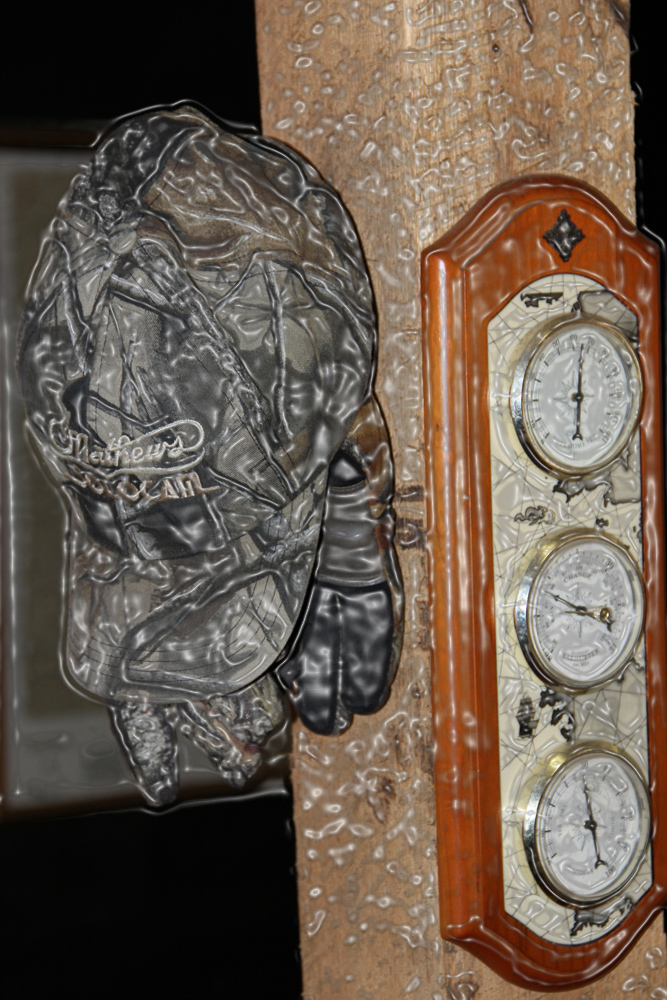


Spending time at the cabin, whether it's hunting season or not, is a nice break from the stresses of everyday life. The lack of certain conveniences and technology seems to have a calming effect. And it's nice to get a small glimpse of what it was like in a simpler time. At the end of the day, it's the simple things that are often the most important.


Monday, September 12, 2011

Eyes, Ears, And Everything Else

Recently, I've had conversations with three different individuals concerning three unrelated incidents or practices that alarmed me. I'm not going to name anyone and my intention is not to call anyone out. My intention is simply to use these examples as reminders of how important it is to protect ourselves.


Eyes
I have a friend who, based on our conversations, rarely, if ever, wears sunglasses outdoors. Most people accept the fact that we need to protect our skin from the harmful rays of the sun. Our eyes need that same protection. Sunglasses are not just a fashion accessory any longer. The effects of the sun can cause or contribute to a variety of eye-related issues, including sunburn of the cornea, macular degeneration, and cataracts. Damage can occur even on overcast days. Winter can also be dangerous because of the light reflecting off the snow. People with lighter colored eyes are more prone to sun damage. I have blue eyes and it's very difficult for me to be outside without sunglasses.


It's not necessary to spend hundreds of dollars on sunglasses. The important part is to get some that block at least 98% of UVA and UVB rays. I personally wear polarized sunglasses that help block glare for a lot of my outdoor activities. The natural aging process will create enough eye problems for us. There's no reason to add to them by not protecting our eyes.


Ears
I recently had a conversation with another friend who just purchased a new shotgun. Naturally, this person wanted to shoot their new gun. The problem was they did not wear any hearing protection. The result was ringing in their right ear and muffled hearing. This lasted for a few days and was bad enough to scare this person. Fortunately, the issues subsided after several days.


It should go without saying that if you shoot any type of firearm, you need to wear hearing protection! Period. Lost hearing cannot be recovered. You may not notice major damage immediately, but if you make it a practice to shoot without protection, you will eventually notice the hearing loss. By then, it will be too late.


There are many forms of hearing protection on the market today that let you carry on normal conversations or hear low level noises, but will block loud noises like gunfire. Nobody really likes to wear hearing protection, but there is no excuse not to do it. Again, aging will create hearing problems for us. We don't need to compound them by doing something silly like shooting without protection.


Everything Else
My most recent conversation was with a co-worker who had a very scary experience. This person was bow hunting last week and was going to hunt out of a hang-on stand that was already in place. For those of you not familiar with a hang-on stand, it is basically a type of stand with a seat, metal framework, and a platform for your feet. They are portable, but most hunters hang them in a tree and leave them for the season. Generally speaking, the stand is secured to the tree with ratchet straps. Access to the stand is made by some form of tree steps, either screw-in or stick ladders that attach with straps.


My co-worker climbed the tree and got in the stand. They had just finished putting on their safety harness when the top ratchet strap broke and the stand tipped forward. This person fell about 4 feet and then the safety line tightened and stopped their fall. Unfortunately, they were spun toward the tree and smashed their face into the stand which was hanging by the bottom ratchet strap. There was a large branch below my co-worker and they were able to stand on it and calm themselves before getting back on the steps and climbing down.


If the strap had broken a couple of seconds sooner or my co-worker had been a couple of seconds slower getting the harness on, this would have been a much different story. They got a bloody nose out of it, but no serious injuries. Where my co-worker went wrong was not putting the safety harness on before climbing the tree. They admitted that while telling me the story. You should always attach your safety harness or vest and line prior to making the climb. Tree stands should be inspected before use to look for any obvious safety issues.


Last Words
We're all adults and I'm not trying to be the safety police. At the same time, with the medical and scientific knowledge we have today, there is no reason for not doing simple things to protect our health. We all know it is important to protect our vision and hearing. The most basic command you will hear on a range before any shooting commences is "Eyes and ears"! If you make it a habit to shoot without eye or ear protection, it is simply a matter of time before it comes back to haunt you. The same goes for hunting out of a tree stand without a safety harness or not using it while climbing up or down.


This is basic safety stuff, but it can prevent a lot of problems for you and possibly even save your life. We all need reminders of that from time to time.


Saturday, August 6, 2011

Thoughts From The Outhouse: Why Is It?

Why is it...
The length of time it takes for a deer to come by your stand is directly proportional to how cold it is?


That hot lure the fish have been hammering and you just lost on a snag, is the only one you have?


Your buddy who gets up late, smokes on stand, and violates most of the basic rules, manages to shoot a big buck?


When boat motors won't crank over, it's always at the ramp during launch and there's lots of people around?


The deer always show up at the spot where you last had your stand?


Our game mounts are prominently displayed for all to see, but the kids pictures are hanging in an unused room?


We can remember to get a new hunting/fishing license, but forget to renew our drivers license?


Why is it...
So much fun to blow on a deer or turkey call just to see how the dog or cat will react?


That big buck you got on your trail camera during pre-season is never seen again starting on opening day?


Our fishing lures are organized and labeled in storage boxes, but we can't find a screwdriver when we need it?


We talk about training and getting in shape for hunting season, but we look for the closest parking spot in front of WalMart?


When you're turkey or squirrel hunting, you see deer all day long?


The fish are always biting what the other guy is throwing?


We won't dare let our archery targets get wet, yet the mower and grill are being held together by rust?


Why is it...
We spend more time cleaning up and getting scent-free for a hunt than we do a date with our significant other?


You see more deer on the way to work than you do while hunting?


You can sit like a statue for hours without seeing anything, but the second you get up to pee, a deer snorts and runs off?


When someone misses a shot, it's always a "huge" buck and it gets bigger every time the story is told?


You can remember to pack your gun, but not the bullets?


We plan our hunting and fishing months in advance, but wait until the last minute to make anniversary celebration plans?


Our hunting knives are razor sharp, but the kitchen knives won't cut butter?


Why is it...
We put so much thought into which decals get priority placement on the back of the truck?


We rag on hunting and fishing TV show hosts, but secretly would love to have their job?


You will only make a bad cast when someone else is watching?


You can bust your butt and do everything right with no results and then the farmer down the road tells you about the monster buck he shot while cutting firewood?


When the boat won't start, the last thing we think to check is the kill switch?


You only get water in your waders when it's ice cold?


The gear you've lost is always in the last place you left it?


And last, but not least...


Why is it outhouses don't come with plungers?

Tuesday, July 5, 2011

Blog of the Week: Sole Adventure

It's been a while since I posted a blog of the week. To get that feature rolling again, I want to share a blog called Sole Adventure by Mark in Missouri. Mark and his brother grew up spending weekends with their grandparents in the country which started his passion for the outdoors. 


Mark describes the name and essence of his blog this way: 
A sole adventure is about being outdoors, exploring on foot.  It is about discovering nature and wilderness.  It is about finding new places and experiencing open spaces.  A sole adventure is also about leaving the comforts of my daily life and pushing myself to do something on my own.  Finally, a sole (soul) adventure is where I rediscover who I am, and why I am here. 


He spends his time hunting, fishing, backpacking, camping, and hiking - when he's not spending time with his wife and daughter. Mark writes about a variety of outdoor topics with an emphasis on hunting. His blog includes tips, techniques, gear reviews, and some humor. 


You guys are in for a treat this week because you are sorta getting a two-for-one special. Not only does Mark have his Sole Adventure blog, he also has a photo blog entitled Life By The Lens. It turns out Mark is quite the skilled photographer and he has some really beautiful and amazing shots on his photo blog! For those of you (and I can think of several) who are more into the photography and not so much the hunting, you will enjoy perusing Life By The Lens


Take a few minutes and visit both of Mark's blogs. You can access his photo blog directly from his outdoor blog. Mark is a great writer and talented photographer! He can be found on Twitter at @SoleAdventure.

Monday, June 27, 2011

Are You Preparing For The Opener?

Bow season opens in Kentucky on September 3rd. That means we have just over two months before we can start flinging arrows at the majestic whitetail. That might seem like a long time to some, but in reality, now is the time to start preparing for the opener. One of the most difficult things to do is prepare for hunting while hunting season is closed. It's summertime, kids are out of school, people are on vacation, there's yard work to be done, and it just doesn't seem like the time to think about hunting. While all of that is true, now really is the time to get ready. It's not rocket science and it's not a big secret. We as hunters know what we have to do to be ready for the opener. I'm going to touch on some of the things that I (and my hunting comrades) do to prepare and I'm sure much of it is similar to what many hunters do. I'd like to hear how you prepare for the season since I know I won't hit on everything.


Equipment
If I'm going to make any changes to my bow setup or try different arrows, etc., now is a good time to do it. Replacing a sight or switching arrows or broadheads isn't really something you want to do at the last minute. Obviously, things happen during hunting season and we sometimes have to replace things, but if it's a change you know about in advance, do it early and give yourself time to adjust. The same goes for a new scope on a rifle or a new bullet or load. Making the changes now gives you plenty of time to practice and make sure the changes are satisfactory. And that definitely applies to buying a brand new bow or gun. Make sure you have ample time to practice and be comfortable with a new bow or firearm.


I like to inspect my gear and make sure everything is in working order. If I find a problem now, I have time to repair or replace something. It's an awful feeling to be in the woods on opening day and find out something doesn't work. I look at my hunting clothes, too, and make sure there are no tears or broken zippers. 


Trail cameras that aren't already out should be checked to make sure they work. When storing a camera, be sure to remove the batteries so they don't corrode. If you plan on buying a new camera, get it early enough so you can test it before you actually need it. We've bought cameras for our property that didn't work out-of-the-box and had to be returned. 


I'm fanatical about keeping my knives sharp. Earlier this evening, I sat down at the kitchen table and sharpened three field dressing knives and a hand ax. I hadn't touched them since last season. Now they're ready to go and I won't have to deal with a dull blade when I actually need it.


I inspect my climbing stand to make sure nothing has come apart or weakened. The same goes for hang-on stands. We have some hang-on stands that actually stay up during the off season. Because those stands are exposed to the elements for a long time, it's important to check them. I'll be the first to say it sucks climbing around in the woods this time of year with all of the bugs, spiders, and poison ivy, but it's not worth risking my life because I didn't feel like inspecting a stand. We also have four permanent stands on our property. Because they are made of wood and are exposed 365 days a year, they have to be inspected for structural integrity. The coons and possums like to use our permanent stands as bathrooms. Then we get leaves and dead branches in them, too. All of that needs to be cleaned out. I really don't want to be replacing boards on a stand after the season is open. 


Now is also a good time to look for potential stand locations. We frequently move our hang-on stands from one season to the next. Because bow season opens so early in Kentucky, many of our tree stands are difficult to hunt from due to all of the foliage. The view in September is radically different from the view in November. We often have to set stands in areas that give us the best possible view in September knowing we may move them once the leaves are off.


Does your ATV or UTV need an oil change, a new battery, or tires? Have you started it since the end of last season? Do the headlights work? If you don't ride your machine on a regular basis, start it up periodically and make sure everything works. How about your utility trailer? If you haul your ATV on a trailer, check the tires and lights (if it has them). If the flooring is wood, make sure it hasn't rotted or become weak.


Practice
I suspect many hunters hang up a bow or gun at the end of the season and don't touch it again until just before the next season. I've been guilty of that many times. When it comes to bow hunting, I try to shoot throughout the off season. It's much better to shoot a little bit at a time over the course of a couple of months than it is to try to shoot a lot in a couple of days. Muscles need time to adapt and get accustomed to movements like drawing a bow. If you haven't shot since last season, that 70# draw is going to tire you out quickly.


Checking the zero on scopes is very important and now is a good time to do it. It also gives you the opportunity to get in a bit of practice. Some hunters view gun hunting as "easy" in comparison to bow hunting, but in reality, practice is just as important with a firearm as it is with a bow.


Conditioning
There's not a flat piece of ground anywhere we hunt. All of our stands require going up one or more hills to reach them. Many of the hills are very steep. They will leave you out of breath and sweating. Like everything else, you can't start exercising a week before the opener and expect to be in good shape. I try to do as much cardio as I can in the months leading up to the season. More often than not, I don't do as much as I should. And it doesn't take long to find out. Anyone who hunts in hilly or mountainous terrain knows exactly what I'm talking about. Use the off season to condition your body in preparation for the hikes and climbs.


Food Plots
Not everyone has a food plot, but if you do, is it ready? Certain plants need to be in the ground at certain times of the year. Is your existing plot in good shape? You can't throw some seeds on the ground two days before the opener and expect grand results. We had the soil tested on one of our food plots and had to add nutrients to the ground before we could even plant anything. It just wasn't optimal for growing good browse. Food plots take a lot of time and effort to achieve the desired results, especially if the plot is large. It's not something that can be neglected until a week before the opener.


Getting Permission
If you want to find new property to hunt, you should already be asking. Don't wait until the day before. Back in February, I discussed Getting Permission To Hunt Private Land in detail. I won't rehash that post, but now is the time to be asking landowners about hunting in the fall. That post explains why.


Odds and Ends
If you need some new piece of equipment or need to re-stock something, start doing that now, if you can. I do my best to have everything I need prior to opening day, but I usually forget something. Waiting until the last minute forces me to rush and never turns out well. It's not always easy to get things two months out from the season because it seems like there is plenty of time, but it goes by quickly.


What Else?
I've covered some of the things I do, or try to do, in preparation for opening day. What's something you do or what did I forget to mention? I know I didn't hit it all. Even if your opener isn't in September, it will be here before you know it.

Tuesday, March 8, 2011

Blog of the Week: The SoCal Bowhunter


This week's blog of the week will be of interest primarily to other hunters - The SoCal Bowhunter by Al Quackenbush. Al is a New York native who now lives in southern California with his wife and daughter. He has been bowhunting for over 27 years and routinely goes back to New York to hunt with his father and brother. 


Al has a well written and informative blog. One of the first posts I read after finding his blog was a gear review. It happened to be his newest post at the time and I was impressed with the thoroughness of his evaluation. Al has reviewed many products and always keys in on the important points. I get the sense from his writing that he is being very impartial and not just praising a product for the sake of giving it good press. If he found something he didn't like, he wouldn't be afraid to say so. In addition to reviews, Al also covers various hunting topics, including his own adventures. 


Al is a pro staff member at DIYbowhunter.com and enjoys participating in do-it-yourself hunts. I didn't know this until recently, but he is also a professional photographer. He has been consistent in commenting here on my blog and always provides me with useful feedback for which I am very appreciative. 


If you enjoy hunting, especially bowhunting, and haven't been following The SoCal Bowhunter, you are missing out! Al is also active on Twitter and you can follow him there at @AlQuackenbush. Give Al a well deserved visit. You won't be sorry! 

Sunday, February 20, 2011

Getting Permission To Hunt Private Land

Have you ever driven by a tract of land and thought, man, I'd like to have the opportunity to hunt there? I'm sure most of us know of property we'd like to be able to hunt, but can't because it's privately owned. In reality, the only thing standing between you and potentially new hunting opportunities is asking permission. I'm going to provide a few pointers that can help make that process a bit easier. 


You might be thinking, uh, Brian, deer season just closed recently and the next season is several months away. Why are you talking about this now? Well, seeking permission to hunt on private property is a bit like scouting - if you want to be ready for the upcoming season, you really need to start working now. Approaching a landowner right before the season is about to open is kinda like studying for a big test the night before. It's not the best way to go. Plus, this applies to any kind of hunting - not just deer hunting. Spring turkey will be opening in many states before too long. Now is the time to get on it. 


Here are a few tips that can help increase your odds of receiving permission... 


Start now and leave the camo at home. You should start making contact with landowners early in the year. It might seem like a minor thing, but asking several months in advance shows that you're thinking ahead and is more respectful than knocking on somebody's door two days before the season opens. This also gives a landowner time to think it over, if necessary, and get to know you better. Some people might be more open to the idea of letting you hunt on their land if they're not being asked to make a spur-of-the-moment decision. 


If you ask early and receive permission, this gives you time to scout and get to know the area well ahead of the season. It also allows you to set up stands or blinds depending on what you've discussed with the landowner. If you ask early and are denied permission, you can then move on to other prospects as opposed to wasting time right before the season opens. 


When knocking on a stranger's door for the first time, I highly recommend leaving the camo attire at home. I like wearing it as much as the next person and I'm not saying you should be ashamed to dress like a hunter. However, since you are meeting a landowner for the first time, I believe it's best to dress in your regular street clothes. Some folks are put off by camo attire and others may have had bad experiences in the past with hunters or poachers. You don't know how a particular landowner feels about hunting. If you show up in camo, it has the potential to create a wall before the person has a chance to hear what you have to say. The idea is to stack the odds in your favor and looking like an average Joe can be helpful for that initial contact. 


Always be polite and respectful. This really goes without saying. Your request should be made politely. Using "sir" and "ma'am" never hurt anyone even though it is less common now. If you are turned down it is very important to remain polite. Remember, you are representing hunters in general and you want to leave a good impression no matter what answer you receive. It has the potential to open doors later. If you receive a definite "no", don't argue or keep going back to ask again. It's part of being respectful.


Being respectful also means be mindful of the landowner's time and activities. Avoid knocking on the door during traditional dinner hours. None of us like to be interrupted during a meal. Try not to disrupt a landowner's work, particularly if they are a farmer or rancher. Time is money for these folks. If it's obvious the landowner is busy in the field or with livestock, think about coming back another time. 


Be prepared to give some information. In some ways, getting permission to hunt private property is a bit like a job interview. At least you should think of it in those terms. You may be asked what you do for a living, where you live, how long you've been hunting, if you've taken a hunter safety course, or possibly even for personal references. If you don't receive permission during that initial contact, ask if it would be okay to leave your name and number. This is especially important if the landowner is going to consider your request. 


Bowhunters can have an advantage. You may talk with landowners who are hesitant to allow gun hunting on their property. Maybe they have concerns about livestock, pets, or just don't want guns being fired on their land. If you are also a bowhunter, you may be able to secure permission to hunt that way. Some people don't have the same concerns about bows that they do with guns. 


It's not a one-way street. If you do get permission to hunt on private property, don't just be a taker. One of the nicest things you can do is offer to assist with work on the land. This is especially true with farmers and ranchers. I don't mean you have to be there every weekend, but maybe there is fence to be repaired or wood to be cut or painting to be done. Offer to donate some of your time in exchange for the hunting privilege. When I was in school, my brother and I helped a farmer bale his hay during the summer as our way of thanking him for allowing us to hunt on his land. It was hot, nasty work, but worth it. Even if the landowner doesn't need or want your help, you can still offer to give them part of your meat. For those who enjoy wild game, this is a nice gesture. 


Make it a point to stop by during the off-season and see if there's anything you can do and just to say hi. This shows consideration for the landowner and helps develop a stronger relationship.


Some definite no-no's. If you get permission for yourself, do NOT show up with a couple of hunting buddies in tow. Nothing will annoy a landowner faster than you presuming you have the authority to invite others. If you want to bring another person along, you need to discuss that up front and have it worked out from the get-go.


Don't litter or otherwise trash the property. Don't drive where you don't have explicit permission to do so. Don't leave equipment behind unless this has been worked out with the landowner. Don't endanger livestock or pets. And don't assume the permission automatically extends from season to season. Always check with the landowner and make sure you can hunt again the following season. 


Final thoughts. If you receive permission, make sure you obey all game laws. The last thing you want is to create problems for a landowner. We should all obey the laws no matter where we hunt, but don't do something stupid on another person's property.


If you show respect toward the landowner and abide by their requests, you will likely develop a good relationship over time as you get to know each other. This helps secure your ongoing hunting privilege. 


Remember, there are people who simply don't want anyone hunting on their land. It could be they don't allow it period or they hunt it themselves. Getting permission is not a guarantee no matter how respectfully you approach it. If you are denied permission, scratch that location off the list and move on to another. Above all, represent hunting and your fellow hunters in the proper manner no matter what answer you receive.


Tuesday, February 1, 2011

Thoughts From The Outhouse: Real Hunting?

There have been several occasions when I have heard someone remark, "Man, I wish somebody would make a real hunting show." A real hunting show? I wonder what a real hunting show would look like?


It's not a big secret that hunters have complaints with many of the current hunting programs. That's not to say that all shows are bad or aren't real, but people have legitimate gripes. I'm one of them. I'm not going to name specific programs, good or bad. That is not the purpose of my post. I will share some of my complaints, though.


Too Expensive
Many of the hunts on TV are priced far above what the average hunter can afford. It doesn't even have to be an expensive safari in Africa. There are many hunts right here in the U.S. that can only be afforded by the wealthy. And I'm not knocking the wealthy. If you can afford to hunt anywhere you like, more power to you. However, for many people these expensive hunts are not realistic because folks know they will never be able to participate. It makes for entertaining television, but may not connect with the majority of hunters.


Box Blinds Over Food Plots
This is an annoyance for me when it comes to hunting shows. There's nothing wrong with hunting this way if that's how you want to do it, although I suspect some might have a different view. I just don't need to spend a half hour watching someone sit in a box over a food plot so they can kill a deer. Anybody who can hit what they aim at can take game this way. To me, this is the least interesting method of hunting to watch. It's great to see kids take their first deer, etc., but I don't learn anything from it.


Whisper Mode
Maybe I'm the only one who is annoyed by this, but I can't stand it when a host whispers non-stop at the camera. I know when they're on stand they don't want to spook game. And I have no issue with whispering brief statements, but to whisper for three or four minutes straight is just irritating! If it's that important maybe they should have said it before getting on stand. Or go back later and narrate that portion during editing. Something. People can't understand half of what they're saying when they whisper. It's really not necessary to talk, anyway. I suspect most viewers don't care. Just sit there and hunt.


Tracking
Some shows are worse than others with the tracking phase. Many folks may like this part of a show, but I could do without it. I don't need to watch a host follow the blood trail to his or her game. The scenes are all the same for the most part and some just come off as staged even if they aren't. The host follows a blood trail, finally spots the game, and throws their hands up in celebration. I'm not belittling the importance of tracking, but in the context of TV shows it's really just filler. Show the shot and just jump to the recovered animal. I realize it's part of the whole process and may be important for image, but there's very little for even a novice to learn by watching tracking on TV. It has to be learned in the field.


Locales
A lot of hunts on TV take place in target rich environments. I've seen more than one show where the host will have a dozen or more bucks in view at the same time. And they're usually not small bucks, either. This isn't a realistic scenario for most hunters. Many hunters don't even have access to private land. From talking with other hunters, last season was awful for many of them. A lot of hunters were fortunate to see does, much less shooter bucks. When the TV shows continually have the hosts in locations with many targets to choose from, it simply doesn't represent what the average hunter experiences. I've heard people say, "I'd like to see so and so come hunt where I do and see how well he does then."


Products
In many ways, hunting shows are just big infomercials for the sponsors. Does it get annoying at times? Sure. I also understand there's a business side to things and sponsors pay the bills. More often, it's not the fact that products are mentioned, but the manner in which they're mentioned. It's as if the hunter wouldn't have been successful if it wasn't for a certain product. Or you have to have the latest and greatest to be successful which is simply not true. Hunting show hosts have nothing on NASCAR drivers when it comes to pimpin' sponsors, though! You NASCAR fans know what I mean. A driver being interviewed after a race can rattle off six sponsors at the beginning of the sentence and still answer the question all while holding a bottle of Coke or Pepsi. And I don't necessarily blame the hosts (or drivers). It's part of the business and sponsors expect a certain amount of exposure for their money. I just don't like it when it's "over-the-top, in-your-face" silly.


So would changes to anything I've mentioned make hunting shows any more real? I've spent many long, boring hours in the stand. How many of us would spend thirty minutes just watching a host sit and never see anything? It might be more in line with what many of us experience, but it probably wouldn't make for good television. Shows need viewers to attract sponsors who supply funding. A boring show won't hold viewers.


I suspect if hunting shows more accurately depicted what most hunters experience, many of them wouldn't last long. You will see shows where tags go unfilled and things go wrong, but those are in the minority. I've stopped expecting to learn much from shows nowadays. To me they're purely for entertainment. I enjoy watching many of them, but I don't get much from them. Some I don't like at all. I suppose you have to decide what your expectations are and then determine what's real for you. This is not meant to bash hunting shows or the people involved in them. I think it's great that people can make a living doing what they love! In terms of hunting in general, many of these folks are good ambassadors. It's a matter of perception and expectations.


Does real hunting take place on these shows? Yes, of course. Does the hunting on most of these shows realistically represent what the majority of hunters experience? My personal opinion is no.


Oh. In case you were wondering, no, I didn't write this while in the outhouse - though some might say it's a bunch of crap. I'm not sleeping in the outhouse, either. That would be the doghouse. I'm just throwing out some thoughts on a topic that gets a lot of discussion in hunting camp.

Sunday, November 7, 2010

Pet Peeves. Or I'm With Stupid.

Sooner or later we all deal with "stupid" people. Some of us more often than others. The hunting, fishing, shooting, and outdoors community is not exempt from the not-so-funny, annoying, and sometimes dangerous behavior of these people. I call them stupid, but often they know exactly what they're doing and their actions are intentional. Or they know better, but just don't care. No matter how you categorize them, there are things people do that really get on my last nerve and give the rest of us that proverbial bad name. I'm going to list some of the things I've experienced that annoy the happy right outta me and then see what pet peeves you have. I'm going to venture a guess that they're very similar. 


This Ain't Your Personal Garbage Dump
There's no excuse for leaving trash behind. Period. I've been in the woods and come across pop or beer cans that looked like they had been there for ten years. That stuff doesn't just magically disappear. Same goes for plastic items. If somebody wants to do that to their own land that's one thing, but it should never be done on public land or when a guest on another owner's property. Throwing trash into a lake or stream is even worse because it's not nearly as easy to clean up. This one is pretty straightforward. If you carry it in, carry it out.

(Gypsies, Tramps, and) Thieves 
Many of us who spend time outdoors have experienced theft of some kind. I hate thieves. Treestands, trail cams, ATV's, firearms, fishing tackle, and even downed game have all been targets of thieves. Vehicles parked at landings, access points, and hunting locations are popular targets. There's simply no excuse. I normally won't leave stands on public land. A good friend I hunt with bought a cheap hang-on stand to use on some public land we occasionally hunt. He locks it on the tree, but if somebody steals it, his thought is that he's not out a lot of money. If it doesn't belong to you, there's no excuse for taking it. Thieves have ruined many an outing for people. In my mind, it's worse if the people who steal are other hunters or anglers. They don't deserve to be called sportsmen because sportsmen don't behave that way. 

Don't Crowd Me, Bro 
You get in the woods or on the water nice and early and get all set up. You're excited and hopeful. The next thing you know, you see another hunter come in and set up fifty yards away or another boat pulls up within casting distance of you. It is possible to end up close to another hunter without realizing they're there at first. When you do figure it out, common courtesy would dictate you move on and find another spot. Crowding other anglers is usually not a mistake. Nobody likes being cut off on a lake or river.

Last April, three of us were turkey hunting on our land. We heard a tom gobbling and had to do some work covering a lot of ground to get in position to call him in. We went back and forth with this tom for quite some time. He sounded hot, but after thirty minutes, it became apparent he was moving away from us. Shortly after that, we heard a gunshot. Long story short, the people who own land adjacent to ours were literally hunting six feet from the property line. A lot of the calling we heard was actually them trying to coax the tom from our property onto theirs. They had shot at the turkey as it flew past them, but weren't sure if they hit it. This wasn't the first time they had hunted right on the line. And it wasn't the first time we had confronted them about it. Yes, they were on their property, but whats aggravating is they own 800 hundred acres - many times the amount of land we have. They could easily hunt far enough away from our property that we would never see each other, but they choose not to. This is a matter of common courtesy and respect in my book.

Safety or Lack Thereof
Nothing gets me out of my happy place faster than unsafe firearms handling. I don't want a gun pointed in my direction...ever. And don't try to be funny and say, "don't worry, it's not loaded". People who can't master the simple rules of firearms safety don't deserve to have them. Don't stand around and chit chat with your gun casually pointed in the direction of others. Don't sight in your gun or check your scope's zero by shooting without knowing what's in the background. And don't take shots at game unless you know you have a safe background. People who walk around with their finger in the trigger guard are just asking for trouble.

Anglers have their share of problems, too, with people who operate boats or jet skis in a reckless manner. I avoid fishing a lot of lakes during the summer for this very reason. There are just too many idiot operators on the water.

Trespassing
This is another pet peeve that is not only highly annoying, but also illegal. If you don't belong there, don't be there. It's one thing to be genuinely lost or mixed up, but when you know you are hunting or fishing where you shouldn't be, I have no sympathy. The people who feign ignorance when caught are the worst. And if they shoot game while trespassing, now they've also stolen what doesn't belong to them. Do the work and seek permission like the majority of sportsmen. 

Generally Poor Behavior
I cringe when I see somebody fishing or hunting and acting a fool. We joke about the beer drinkin' redneck hunter stereotypes, but there's a reason those stereotypes exist...because some people actually behave that way. How does tossing beer cans out the window of your big, noisy four-wheel drive truck while "road hunting" promote anything but a negative image? Rudeness is not a good way to make a favorable impression on the general public, either. For that matter, it doesn't go over well with other hunters or anglers. People will generally remember a negative encounter more so than a good one. The non-fishing, non-hunting public often associates bad behavior with all sportsmen. We have enough to deal with in protecting our sport without slobs making it more difficult.

What Are Yours?
These are big pet peeves in my outdoors book. What are things you've seen or experienced that annoy you? And it doesn't just happen to hunters and anglers. Campers, hikers, photographers, and anyone who spends time outdoors have seen things that flip their switch. I know my list isn't all inclusive. And that's unfortunate.


Tuesday, October 19, 2010

Review: Redfield Rebel Bino's


For the past year, I've been on the hunt for new binoculars to replace my aging Bushnell's. Not only have they been used heavily, but technology has advanced so much that it was simply time for a better pair. After doing a lot of research, I settled on the Redfield Rebel 10x42 bino's. Hunters know Redfield for their quality scopes and now they're making binoculars and range finders.

Let me get the technical spec's out of the way first. The Rebel's are 5.9" long, weigh 26.4 oz.'s, have a field of view of 341' at 1,000 yards, and a close distance focus of 4.3 feet. They are a roof prism design utilizing BAK4 prisms and fully multicoated lenses. The Rebel's are fogproof, waterproof, and have an armored aluminum body. They are black in color and come with lens covers, neoprene neck strap, and a carry case. 

Redfield Rebel 10x42 binoculars

My criteria for new binoculars included a set price range, roof prism design, and ten power magnification. The roof prism design is more compact than porro prism designs and I wanted a higher power than my previous pair. Obviously, the higher the power the more "shake" you will notice when looking through a pair of binoculars. That's something to keep in mind if you don't have steady hands. 

The Rebel's lenses are fully multicoated which means every lens and lens surface has been coated multiple times. Generally speaking, there are three types of coating: coated, fully coated, and fully multicoated. Coated is the least extensive type and means only certain lens surfaces are covered. This is normally used on cheaper quality bino's. Fully coated is the next step up and covers all lens surfaces once. Fully multicoated covers every lens surface with several coats, as I mentioned, and is used on high quality binoculars. These coatings help with light transmission, anti-reflection, and glare. 

In addition to the high quality coating, the Rebel is built using BAK4 prisms which are made from higher quality glass. BK7 prisms are made of lower quality glass and are found in cheaper quality bino's. BAK4 prisms provide much clearer, sharper images. Most manufacturers will specify what kind of prisms and coatings are used in specific binoculars, but if you find some that don't, you can bet they're probably cheaply made. 

I've used my Rebel's while hunting and I am more than impressed with the quality of these binoculars! The view is sharp and crisp from edge to edge. Light transmission is exceptional. They feel solid and well built. The focus wheel turns flawlessly - there's no catch or looseness. The eyepieces adjust for people who wear glasses, but unlike older binoculars where you folded the rubber eyepiece down, these eyepieces twist up and down. The armored finish provides a very secure grip and I can attest that they are indeed fogproof. 

I watched two bucks from my stand this past weekend and was very pleased with the image these binoculars produced. I have a pair of Steiner binoculars that I don't use for hunting because they are too large. Anyone who knows anything about binoculars knows Steiner produces quality stuff. I literally cannot tell a difference between the Redfield's and the Steiner's just by looking through them. And my Steiner's cost four times as much. 

In addition to the 10x42 model which I have, the Rebel is also available in an 8x32 version. If you prefer a porro prism design, Redfield makes a Renegade line consisting of a 7x50 model and a 10x50 model. Now for the cool part...the Rebel 10x42 will run you $150. That's it. Try finding quality bino's with the features of the Rebel in that price range. They are few and far between. 


I am extremely pleased with my choice of binoculars to replace my old Bushnell's. Binoculars are very much a personal preference item, but if this is the style of bino you like, you should have these on your short list the next time you're shopping for a new pair. 

I know Cabela's and Bass Pro sell the Redfield's. Gander Mountain does not as of the time of this review, but I'm sure there are several other places that do. You can see the Redfield binoculars on their website: Redfield Binoculars. They did it right the first time with these optics.