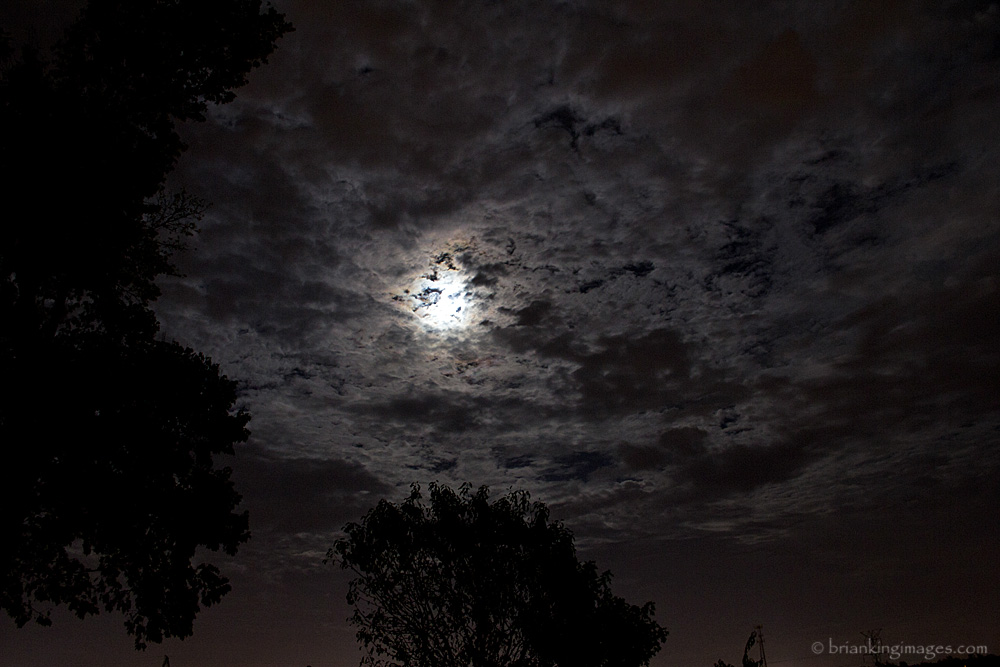
1/8 sec. f/9 ISO 100
Showing posts with label moon. Show all posts
Monday, September 16, 2013
Friday, June 28, 2013
Night Light
1/100 sec. f/9 ISO 100
I'm at the point where I'm bored with moon photos. Unless I can include another element in the shot, the photos all look the same. I almost didn't even photograph the "supermoon" the other night, but decided to take a few shots, anyway. This may be the last moon photo I post for a while unless I can get a more interesting scene.
Linking to Skywatch Friday
I'm at the point where I'm bored with moon photos. Unless I can include another element in the shot, the photos all look the same. I almost didn't even photograph the "supermoon" the other night, but decided to take a few shots, anyway. This may be the last moon photo I post for a while unless I can get a more interesting scene.
Linking to Skywatch Friday
Sunday, April 7, 2013
Sunday, January 6, 2013
Friday, December 14, 2012
Sunday, September 2, 2012
My "Blue" Moon
The "blue moon" has been a big deal recently not because it looks any different than any other full moon, but simply because it's the second full moon in a month. It won't occur again until July 2015. I was hoping to get some early evening shots of it while the sky was still blue, but as my luck would have it, clouds rolled in and the moon was covered. Later in the night, the clouds broke a bit, but not enough to get close up shots like I would normally take. Rather than fighting the clouds, I decided to put on a shorter lens and use them to my advantage. The moon actually became the secondary subject.
Labels:
moon
Sunday, August 26, 2012
Sunday, June 3, 2012
Flying High II
The moon was very visible early in the evening a few days ago, so I decided to snap a few photos. I took two shots and still had the camera up to my face when I noticed the jet enter the viewfinder and I took this photo. This is one of those situations where skill had absolutely nothing to do with the outcome. I was simply lucky, fortunate, or whatever word you want to use. Had I been just a few seconds later, I would have missed it completely.
Labels:
moon
Thursday, April 19, 2012
How I Shoot The Moon
After posting some of my moon shots recently, I was asked by several people how I get the photos to turn out the way they do. I'm not a professional by any stretch of the imagination. I basically learned through trial and error. I had a whole lot of bad shots to get to the decent ones I posted. If I had someone to show me, it would have been much easier.
Equipment does play a part in the equation, but the right settings are very important. I realize not everyone has the same type of gear and you may be limited by what you have available. Even so, you may be able to make some adjustments and at least improve the results with what you have.
Typical Shot
A lot of people shoot with their camera in automatic mode. There's nothing wrong with that for many situations. Auto mode doesn't work for moon shots, though. The camera will try to compensate for the dark scene and end up overexposing the moon turning it into a bright blob of light with no detail. All of us have seen photos that look like this one.
That is the moon, but it's grossly overexposed and there's absolutely no detail. It could just as easily be any bright artificial light source. Point-and-shoot cameras and DSLR's set on auto will generally give you this kind of result. The best way to shoot moon photos is in manual mode if your camera is capable of that. This is a situation where you need to tell your camera to step aside and let you make all the decisions.
My Gear And Settings
I use a DSLR and a 500mm lens for moon photos. Not everyone has a large lens like that, but you should use the longest reaching one you have.
I always shoot in manual mode and I also focus manually. Auto focus doesn't do well in a situation like this. It's not like the moon is going to jump up and run away, so you have plenty of time to focus manually and make sure it's dead on. Again, depending on your equipment, you may not have the option to focus manually.
My f stop is normally set from 8 to 11. All DSLR lenses have a "sweet spot" in the f stop ladder where they provide the sharpest result. Generally, that's two to three stops above the lowest number (or largest aperture) of your lens.
My shutter speed varies a bit more, but generally stays in the 160-400 range. If the moon is really bright, I'll use a faster shutter speed like 400 to keep the moon from being overexposed. If the moon is pale or darker, I'll use a slower shutter speed to keep it from being underexposed. This is where experimentation and taking shots at different speeds will show you where you need to be.
A tripod is a big help and it's a good idea to use one if you have it. The majority of my moon photos, however, have been taken handheld. That's because I often get my shots while out driving and I don't have my tripod. I pull off the road and rest my lens on the door frame or get out and lean against my truck for support. If I'm home, I'll use my tripod and a shutter release cable.
Other Considerations
This definitely may not apply to everyone, but if you can do it, it's another way to get the end result you want. I shoot all of my images in RAW format rather than JPEG. You have to have a camera capable of doing that. Most DSLR's will and perhaps some advanced superzooms and newer high end point-and-shoots. RAW format gives you greater ability to tweak your photos during post-processing. You can adjust the white balance and exposure. Your eyes see the moon as white, but sometimes in your photos it may have a colored tint to it. If the exposure wasn't exact during the shot, you can adjust this with RAW images. You don't have as much freedom to do this with JPEG photos. You have to have editing software capable of handling RAW images (like Photoshop or Lightroom). If you own a DSLR, it most likely came with software that will do this if you don't have a third party editing program. Shooting in RAW is not a must-do by any means. It's just another way to help get the desired results.
A second consideration is cropping. Even with a 500mm lens, you aren't going to be able to fill the frame with the moon. It's just too far away. If you want an "in your face" shot that shows the detail on the surface of the moon, cropping is a way to get it.
This shot was taken with my 500mm lens and has not been cropped. There's nothing wrong with this photo and sometimes you may want a shot that gives the feeling of space.
This is the very same photo, but I've cropped it to eliminate some of the space and provide a more detailed look at the moon. This is where focusing becomes very important. Cropping this way only works if your focus is spot on. If the focus is off, cropping will only make it more apparent.
Another tip to keep in mind is the position of the moon in the sky. Full moons low on the horizon often appear very large and brilliant. If you can take your shots while the moon is low, you can get some dramatic results. Your surroundings will play a part in this. Buildings, neighborhoods, trees, and the terrain often block the moon when it's low. I already know the spots I can go to and catch the moon in this position. That's not to say you can't get great shots when the moon is higher. I've taken many photos when the moon is overhead, but it loses that large, looming appearance. And the moon phase also plays into that. Obviously, it doesn't look like that every night.
To summarize, shoot in manual mode, focus manually, and try setting the f stop in the 8 to 11 range with shutter speeds in the 160 to 400 range. I didn't address ISO settings, but I keep mine as low as possible. Keep in mind, pressing the shutter button is free! The great thing about digital is you can take all the shots you want. Experiment with your settings and just keep taking pictures. There's a delete button on your camera for a reason. I'm a firm believer that the more photos you take, the better your photos will become. It requires practice just like anything else.
I don't know if any of this will really be helpful to anyone, but if just one person emails me and says something here was useful and made a difference in their photos, then it was worth it. And, please, if you already get good moon shots, don't screw them up by listening to me.
Labels:
moon,
photography
Thursday, April 12, 2012
Morning, Moon, And Night
Over the past couple of weeks, we've had some clear nights and the moon has been very visible and bright in several phases. Not only has it been visible at night, but in the morning and early evening as well.
This photo was taken around 7:15 in the morning.
These shots were taken in the evening as the sun was going down.
And, obviously, the night shots. The last one being of the most recent full moon.
If you live in the country or have a place away from buildings, hills, and trees, you can catch the moon while it's still low on the horizon. That can make for some dramatic shots before it gets too high in the sky.
Labels:
moon
Sunday, March 25, 2012
Shoot The Moon(s)
During the last full moon, I was fortunate to get a shot of it during the early evening hours before the sun had even gone down. And, of course, the obligatory after dark shot.
Linking to Your Sunday Best and Weekly Top Shot
Labels:
moon
Friday, March 2, 2012
Shoot The Moon II
The last time we had a clear night it also happened to contain a full moon (Shoot The Moon). We had another clear night on February 29, Leap Day. This time it contained a waxing quarter moon. My fellow blogger, Andrew, posted some information that I wasn't aware of (see his moon post here). Apparently, a quarter moon hasn't occurred on February 29 since 1935 and won't occur again until 2088. Since I won't be around in 2088, I'm glad I took some photos Wednesday night.
Linking to Skywatch Friday
Labels:
moon
Friday, February 10, 2012
Shoot The Moon
With all of the rain and overcast conditions we've had this winter, the moon hasn't been visible all that much. It was full recently and it happened to be a clear night so I didn't pass it up. I took 20 or so shots with a couple of different lenses at various focal lengths just for variety.
Linking to Skywatch Friday
Friday, January 20, 2012
"Moonset" And Sunrise
I was in the woods very early one morning during hunting season and was able to watch the moon as it slowly disappeared in front of me while the sun was slowly rising behind me. The moon remained quite visible for a while even after the sun was above the horizon.
Linking to Skywatch Friday
Subscribe to:
Comments (Atom)